
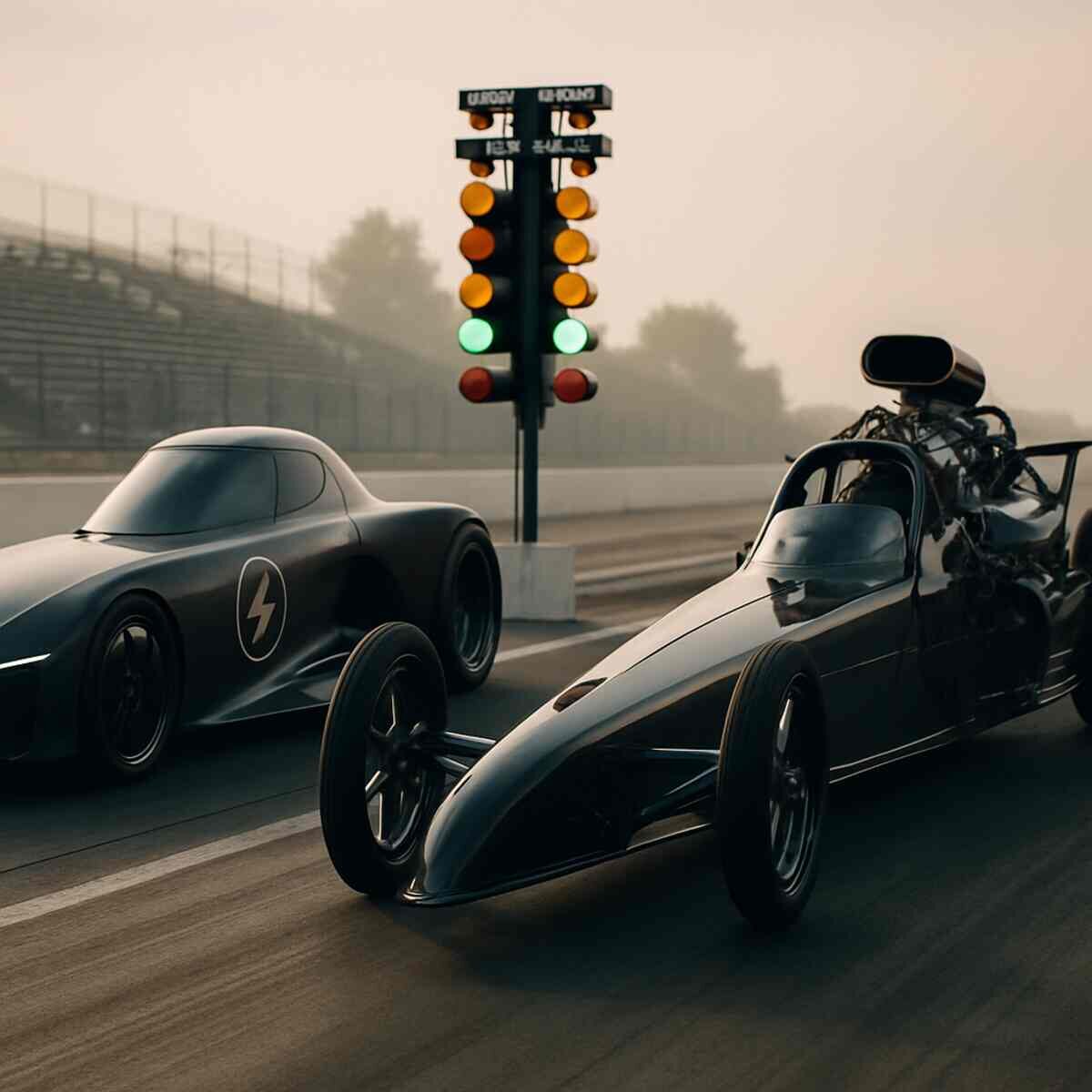
Picture a drag race. The ground shakes as two V8 engines roar to life, unleashing a sound so powerful you feel it in your chest. Now, imagine another car at that same starting line. It launches in near-total silence, a high-pitched whine replacing the thunder, and disappears down the track faster than you can process. This isn’t science fiction; it’s the shocking reality of the e box dragster. Often the Amazing fact about E box dragster.
Unlike a gasoline car that needs to build power, an electric dragster is designed for one thing: brutal, immediate acceleration. This principle of instant power delivery is the secret behind every modern electric vehicle drag race, turning quiet torque into world-class speed.
But is it truly competitive? For years, many dismissed the idea. That changed when, according to official National Electric Drag Racing Association records, driver Steve Huff’s electric dragster hit a staggering 201.07 miles per hour in the quarter-mile. The run, accomplished in just 7.52 seconds, proved that electric power wasn’t a novelty; it was a legitimate threat to the internal combustion engine’s dominance.
These silent record-breakers are more than just a curiosity; they represent a fundamental shift. By combining blistering speed with a completely different sensory experience, electric technology is forcing drivers, fans, and engineers to rethink the very definition of performance. This is the future of drag racing, and it’s arriving faster—and more quietly—than anyone ever expected.
The Light Switch vs. The Dimmer: What Makes Electric Dragsters So Explosively Quick?
If you’ve ever ridden in a consumer EV like a Tesla, you know the feeling of being instantly pushed back into your seat. Now, imagine that force multiplied to a level that feels like being launched off an aircraft carrier. The secret behind how electric dragsters work isn’t just about having more power, but about how that power is delivered.
The key advantage lies in a concept called “instant torque.” Think of a traditional gasoline engine like a dimmer switch for a light—you have to turn the dial and wait for the power to build to its peak. An electric motor, by contrast, is a light switch. The moment the driver hits the pedal, 100% of the motor’s twisting force is available. There’s no lag, no waiting for revs to climb. This is the fundamental edge in an electric dragster vs gas dragster showdown.
This immediate, brutal power delivery is what makes physics-defying numbers possible. With all that force arriving at once, E box dragsters can launch from 0 to 60 miles per hour in well under one second—a feat most combustion engines simply can’t replicate. Of course, getting that power to the ground requires more than just a powerful motor; it takes a perfect harmony between the “gas tank,” the “engine,” and the “brain” of the machine.
Inside the Beast: The “Gas Tank,” “Engine,” and “Brain” of an E Box Dragster
Harnessing that violent, instantaneous launch requires a system that is both brutally powerful and incredibly smart. While a gas-powered dragster is a complex puzzle of hundreds of moving parts, its electric counterpart is shockingly simple in concept. It all boils down to three key components working in perfect, silent harmony: the battery, the motor, and the controller.
The journey begins with the Battery Pack, which is the dragster’s “gas tank.” Forget the battery in your car; this is more like a controlled lightning strike. The latest in electric dragster battery technology allows these packs to store immense energy and, more importantly, discharge it in a massive, overwhelming surge that would be enough to power a house—all in under ten seconds.
That torrent of energy is then unleashed into the Electric Motor, the “engine” of the beast. Unlike a V8 with its pistons, valves, and crankshafts, the best electric dragster motor might have only one major moving part. It’s a masterclass in efficiency, converting electrical energy directly into the raw, tire-shredding rotational force needed to achieve those mind-bending speeds.
Of course, dumping that much power at once would be uncontrollable chaos. This is where the “brain” comes in—the Controller. This sophisticated computer, a specialized high voltage DC controller for racing, acts as the ultimate gatekeeper. It instantly translates the driver’s command into a precise flow of electricity, ensuring the motor delivers the perfect amount of power without turning the car into a cloud of smoke. This elegant simplicity has a major impact when comparing these silent killers to their roaring cousins.
Electric vs. Gas: A Head-to-Head Speed and Maintenance Showdown
When an electric dragster and a gas-powered car line up, they showcase two completely different philosophies of speed. An EV is a cannonball, exploding off the starting line with 100% of its power available in an instant. This gives it an almost unbeatable advantage in the first 60 feet of the race. A traditional Top Fuel dragster, however, is more like a rocket, building its staggering power as it hurtles down the track, often reaching a higher top speed right at the finish line.
Beyond that initial launch, however, lies the electric car’s true secret weapon: predictability. A gas engine, with all its violent internal explosions, can have slight variations in performance based on weather and wear. An electric dragster vs a gas dragster is a study in contrast; the computer-controlled electric powertrain delivers the same, optimized power curve on every single pass. This incredible run-to-run consistency is like a video game where a racer can hit the “perfect start” button every time, a massive advantage in a sport decided by thousandths of a second.
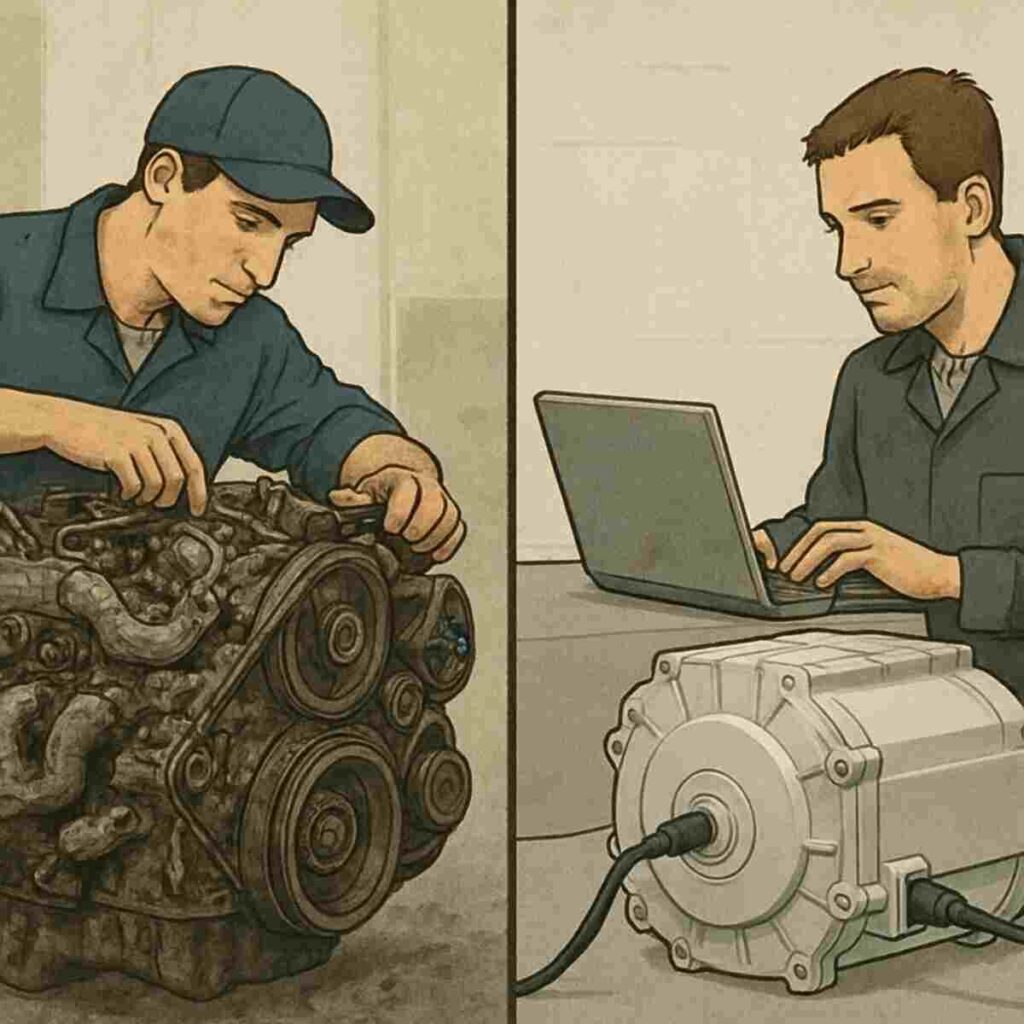
This digital precision extends to what happens between rounds. After a single quarter-mile run, a gas engine team frantically tears down the motor to replace stressed parts. For an electric team, the process is shockingly calm. They recharge the batteries, cool the system, and plug in a laptop to analyze the data. With drastically fewer moving parts, one of the key advantages of electric drag racing is that crews spend less time turning wrenches and more time perfecting their strategy.
So, with instant torque and robotic consistency, are EVs simply better? This new technology is undeniably shaping future drag racing trends, but it isn’t a magic bullet. This silent revolution comes with its own price: a constant battle against immense heat, heavy weight, and the unique dangers of high-voltage electricity.
The Price of Instant Power: Taming Heat, Weight, and High-Voltage Danger
That incredible burst of power comes at a cost: unimaginable heat. Think about how your phone gets warm when you use it intensively; now imagine draining a battery a thousand times larger in just eight seconds. This rapid discharge can make batteries dangerously hot, causing them to lose performance and risk permanent damage. Consequently, a huge part of electric dragster battery technology involves sophisticated cooling systems—like a radiator on steroids—that work to keep the cells in their optimal temperature window for that single, violent pass.
Another major hurdle is the sheer weight of the batteries. In a sport where every ounce counts, teams are strapping in battery packs that can weigh hundreds of pounds. This creates a constant tug-of-war for engineers: they need more batteries for more power, but every battery added is like putting another brick in a sprinter’s backpack. Finding the perfect balance between raw power and a lightweight chassis is one of the most difficult puzzles in EV drag racing.
Beyond performance, there’s the critical issue of safety. We’re not talking about the 12-volt battery in your family car; these dragsters operate on systems pushing over 800 volts, a current far more dangerous than a household outlet. Because of this, strict EV drag racing safety requirements are in place. Battery packs are housed in blast-proof containment boxes, and a special high-voltage DC controller for racing is programmed with emergency cutoffs that can instantly de-energize the entire system in case of a crash, protecting the driver and first responders.
Tackling these intense challenges of heat, weight, and electricity is what separates a garage project from a record-setting race car. As engineers develop clever solutions to these problems, official racing bodies are working just as hard to create a rulebook that ensures fairness and safety for this new era of motorsport.
From the Garage to the Track: What Are the Official NHRA Rules for EV Drag Racing?
With all that raw power and high voltage on the line, racing can’t be a free-for-all. This is where the National Hot Rod Association (NHRA), the main governing body for professional drag racing, steps in. Recognizing the incredible potential of these cars, the organization has created a dedicated racing class specifically for electric vehicles. This move provides a formal framework, complete with its own NHRA electric vehicle class rules, giving these silent rockets a legitimate home on the drag strip and answering the question of where they fit into the world of motorsport.
Unsurprisingly, the core of the rulebook is built around managing the unique risks of EVs. The EV drag racing safety requirements are strict, directly addressing the dangers discussed earlier. For instance, battery packs must be sealed within heavy-duty, blast-proof containment boxes to protect the driver from a potential thermal event. Furthermore, every car must feature large, clearly-marked emergency shutoffs that allow safety personnel to instantly de-energize the entire high-voltage system, making the vehicle safe to approach after a run or in an emergency.
But these rules do more than just keep drivers safe; they give the entire sport a future. By providing official recognition, the NHRA legitimizes electric drag racing, turning it from a niche experiment into a sanctioned competition. This encourages more tracks to host electric vehicle drag race events, inspires more engineers to build cars, and assures fans that what they are watching is the next chapter in professional racing. This formal structure is not just for the pros; it’s also paving the way for a whole new generation of racers to get their start.
Starting Young: How Electric Power Is Making Junior Drag Racing More Accessible
The idea of professional racing often brings to mind seasoned veterans, but the sport’s future stars actually get their start much earlier. This is made possible through the Junior Dragster category, which is essentially the little league of drag racing. These are not toys; they are half-scale versions of the top-fuel dragsters, designed for kids and teens aged 5 to 17 to safely learn the fundamentals of the sport. Traditionally powered by small, single-cylinder gasoline engines, these cars provide a crucial training ground for the next generation of drivers.
However, a quiet revolution is changing this entry-level class. Instead of dealing with the quirks of a tiny gasoline engine, teams can now use a junior dragster electric conversion kit. This allows them to replace the gas motor with a battery and an electric motor, a project that simplifies the process of how to build an electric junior dragster. This swap isn’t just a novelty; it fundamentally changes the experience for these young racers, making the sport more accessible and focused on skill development from the very first pass down the track.
For a young driver learning the ropes, the benefits of electric power are immense. An electric motor delivers perfectly consistent power every single time, removing the frustrating variables of a finicky gas engine. This allows the driver to focus purely on their reaction time and driving technique. Furthermore, the maintenance is drastically reduced—no more oil changes or carburetor tuning. This shift not only makes racing easier to get into but also gives us a glimpse into the future of drag racing, where talent is nurtured on the same silent, instant-torque technology that powers the sport’s most advanced machines.
What Does It Cost to Go 200 MPH on Batteries? The Surprising Price of an E Dragster
Moving from the junior leagues to a full-size electric dragster is a serious leap in both performance and price. While a top-tier gas-powered drag car can cost hundreds of thousands of dollars, the cost to build an electric drag car capable of competing at a high level is also a significant investment. A competitive car often starts in the $75,000 range, with elite, record-setting machines easily pushing past $150,000. This initial price tag covers everything from the specialized chassis to the high-power electronics needed to safely harness silent speed.
Unlike a traditional build where the engine is the centerpiece, the budget for an E dragster is dominated by its electrical heart. The most significant expenses are the custom battery pack and the motor-controller combination. This isn’t just any battery; it’s advanced electric dragster battery technology engineered to discharge an enormous amount of energy in seconds—think draining a swimming pool through a fire hose. Similarly, the best electric dragster motor and its paired controller must work in perfect harmony to handle over a thousand horsepower without melting down, forming the brain and brawn of the entire operation.
However, the steep upfront cost doesn’t tell the whole story. The long-term economics are where electric power reveals its surprising advantage. A comparable gas dragster guzzles expensive, specialized race fuel and requires constant, costly engine teardowns and rebuilds. An electric dragster, by contrast, “refuels” from a high-voltage charger and has drastically fewer moving parts to wear out. This means far lower running costs and less time in the garage, allowing teams to invest more of their budget into winning races rather than just maintaining the engine.
Beyond the Quarter Mile: What Electric Drag Racing Means for the Future of Speed
The idea of a silent dragster once seemed like a contradiction in terms. Now, its secret is clear: an electric motor’s ability to deliver all its power in a flash is a key advantage of electric drag racing, perfectly suited for the explosive nature of the quarter-mile. The roar of a V8 is no longer the only sound of speed; the high-pitched whine of an electric motor is the sound of pure, brutal acceleration.
This technology is only getting started. Future drag racing trends point toward even more astonishing speeds as innovations push battery performance and motor efficiency further. As batteries get lighter and more powerful, it begs the question: are we on the verge of seeing a silent car become the fastest vehicle on the planet? The record for ‘what is the top speed of an electric dragster‘ is constantly being broken.
To witness this shift firsthand, search for an “electric dragster record run” online. Seeing that silent launch isn’t just watching a fast car—it’s a glimpse of the future, both on the track and for the technology that will eventually find its way into consumer vehicles.
