
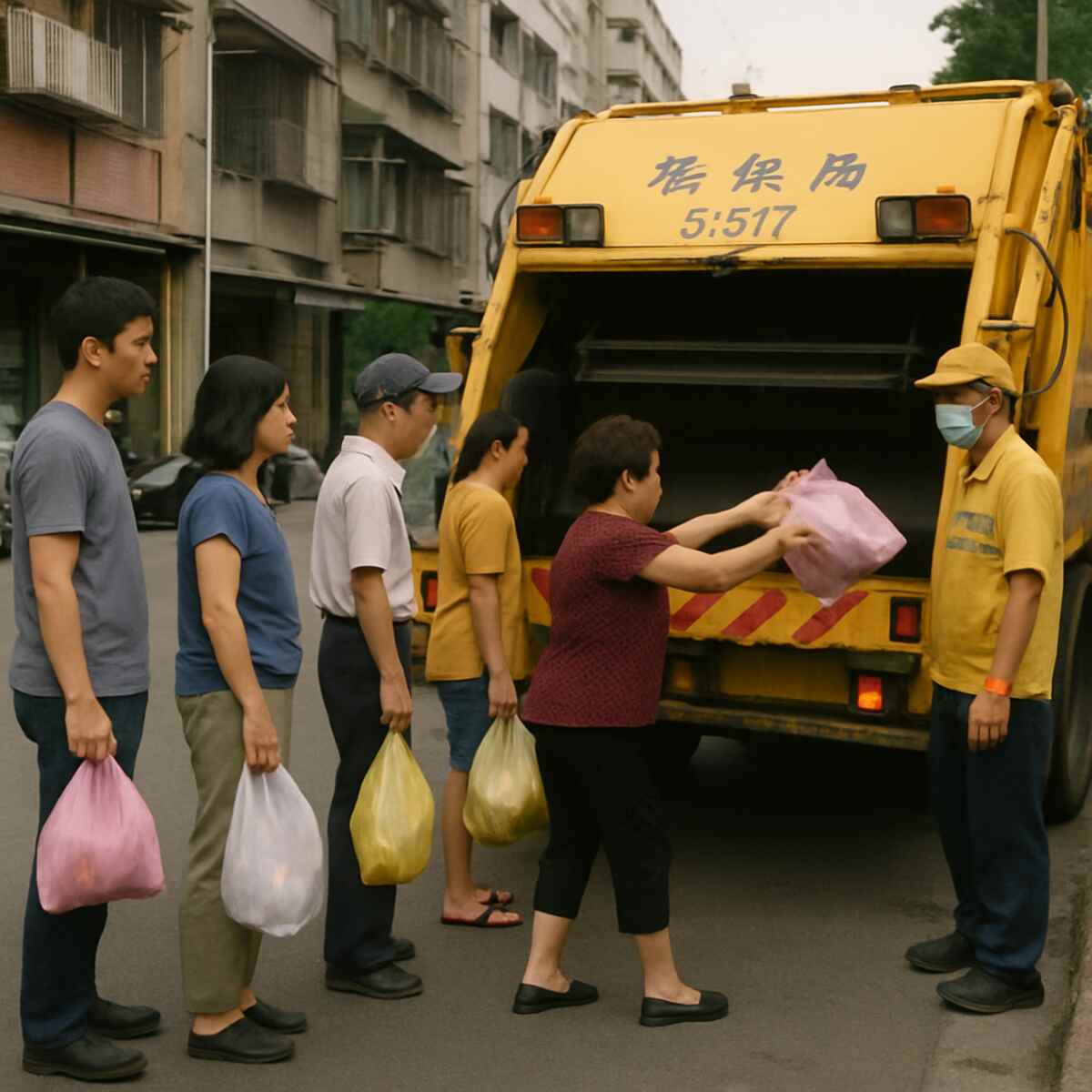
If you are walking down the vibrant streets of Taipei, Taichung, or Kaohsiung on a breezy evening, you might suddenly hear the classical notes of Beethoven’s “Für Elise” or Tekla Bądarzewska-Baranowska’s “A Maiden’s Prayer” echoing through the air. To a newcomer, it sounds like a neighborhood ice cream truck. To a local, it is the undeniable call to action: the garbage trucks have arrived. The actual Interesting Info about phân loại rác ở đài loan.
Waste Sorting in Taiwan is much more than a municipal chore; it is a globally recognized environmental triumph, a daily community event, and a testament to civic responsibility. Just a few decades ago, Taiwan was mockingly dubbed “Garbage Island” due to overflowing landfills and rapid industrialization. Today, it boasts one of the highest recycling rates in the world, often surpassing 55%.
Whether you are an expat relocating for work, a student settling in for a semester, or an environmental enthusiast studying global green policies, mastering recycling in Taiwan is essential. This comprehensive guide will walk you through every nuance of the system, ensuring you can navigate your daily waste disposal like a true local.
The Evolution of Taiwan Waste Management
To truly appreciate the current system, one must understand how far the island has come. In the late 1980s and early 1990s, Taiwan’s economic boom brought a severe side effect: an unprecedented amount of garbage. With limited land area and rising consumption, landfills quickly reached capacity, leading to illegal dumping and severe environmental degradation.
The turning point came with the implementation of strict government policies and a massive public education campaign. The cornerstone of this revolution was the mandatory 3-in-1 resource recovery system. Introduced by the Environmental Protection Administration (EPA), this policy integrated three crucial pillars: community residents, recycling enterprises, and municipal garbage collection teams. By forcing residents to sort their waste, municipalities could seamlessly pass valuable materials to private recycling firms, creating a closed-loop system.
Furthermore, the government heavily invested in Taiwan circular economy initiatives. Rather than simply disposing of waste, these initiatives aim to design out waste and pollution, keep products and materials in use, and regenerate natural systems. Today, discarded plastics from Taiwan are spun into high-quality textiles (famously used to make jerseys for FIFA World Cup teams), and glass is repurposed into eco-friendly building materials.
Understanding the “Pay-As-You-Throw” System
One of the most effective strategies implemented in Taiwan waste management is the “Pay-As-You-Throw” (PAYT) system. Instead of charging a flat waste-disposal fee on water or utility bills, cities like Taipei and New Taipei charge residents based on the exact amount of general refuse they produce.
The Designated Garbage Bags
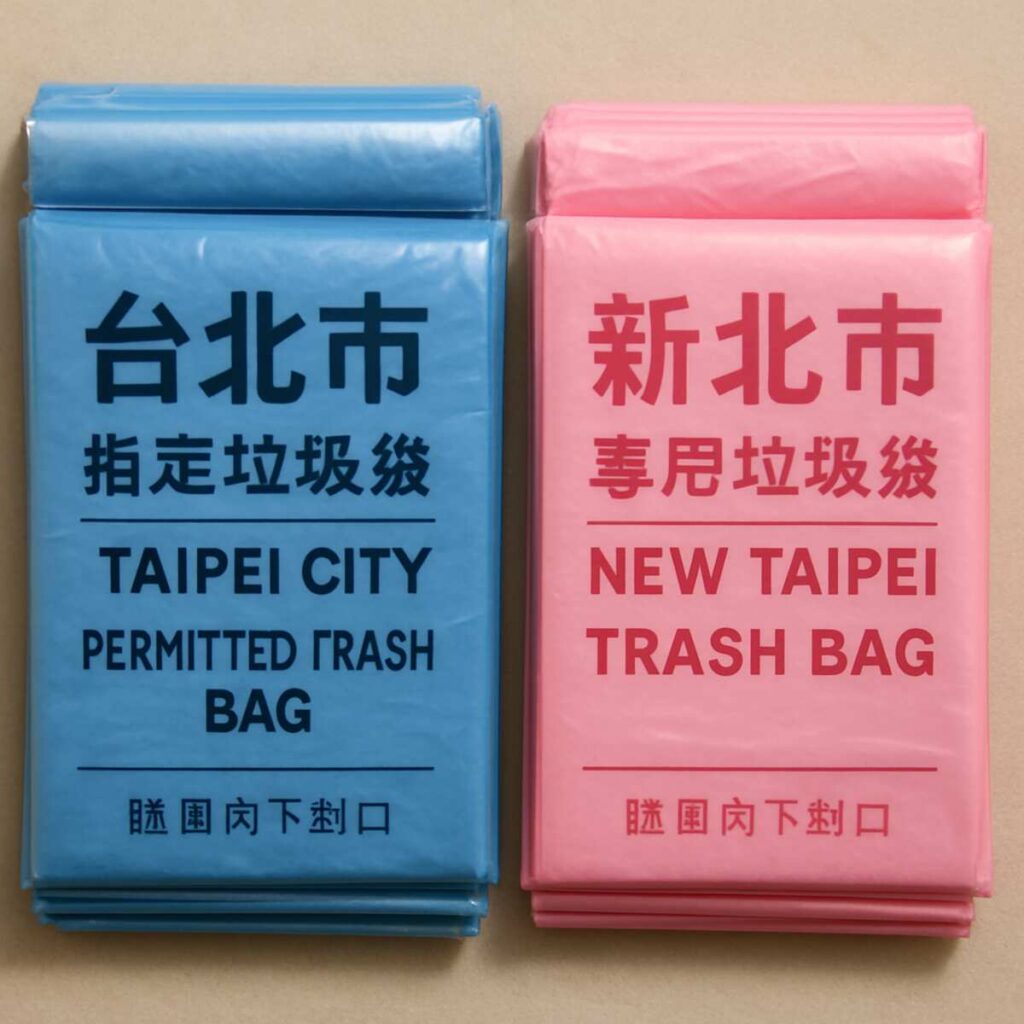
How does the government track your trash output? Through color-coded, municipal-approved garbage bags.
If you live in the capital, you must use the Taipei official blue trash bags. In neighboring New Taipei City, the bags are pink. You cannot use standard black or white plastic grocery bags for your general refuse; if you attempt to toss an unofficial bag into the garbage truck, the sanitation workers will refuse to accept it, and you may face a hefty fine.
Because you have to pay for these bags, there is a direct financial incentive to reduce your overall waste. The more you recycle and compost, the fewer blue bags you have to buy. It is a brilliant psychological and economic tool that shifted the public’s mindset almost overnight.
Where to Buy Designated Garbage Bags
A common question for new arrivals is where to buy designated garbage bags. Fortunately, they are incredibly accessible. You can purchase them at:
- Convenience stores: 7-Eleven, FamilyMart, OK Mart, and Hi-Life all carry them behind the counter. Just ask the cashier for “lè sè dài” (垃圾袋).
- Supermarkets: PX Mart, Carrefour, and Mia C’bon stock various sizes.
- Local grocery shops: Many independent neighborhood stores also sell them.
The bags come in multiple sizes, ranging from 3 liters to a massive 120 liters, allowing households to buy exactly what fits their daily needs.
The Core Categories: How to Sort Your Waste
The system’s sheer efficiency relies on meticulous sorting at the household level. Differentiating between household trash vs recyclable materials is just the first step. You must categorize your waste into three main streams: General Refuse, Recyclables, and Food Waste.
1. General Refuse (The Blue Bag Waste)
General refuse includes anything that cannot be recycled or composted. This is the only type of waste that goes into your paid, designated municipal bag. Common items include:
- Tissues, napkins, and toilet paper (if not flushable)
- Diapers and sanitary products
- Heavily soiled food wrappers
- Broken ceramics or heavily treated wood
2. Recyclables (The Free-to-Dispose Waste)
Recyclables do not need to be placed in the official municipal bags; you can carry them to the recycling truck in any standard bag or box (which you must then take back with you or empty out). The recycling truck typically follows directly behind the general garbage truck.
To make things easier, look for the four-arrow recycling symbol on product packaging. The Taiwan EPA recycling symbols guide is standardized across the island. The arrows form a square, and there is usually a Chinese character in the center denoting the material type (e.g., plastic, paper, metal).
You are generally expected to sort recyclables into two main sub-categories before handing them to the workers:
- Flat Recyclables: Cardboard boxes (flattened), paper bags, magazines, and newspapers.
- Three-Dimensional Recyclables: Glass bottles, plastic bottles, aluminum cans, and styrofoam.
Pro Tip: You must rinse out your food and beverage containers before recycling them. A quick rinse prevents foul odors and keeps pests away from the municipal recycling facilities.
3. Food Scraps (Kitchen Waste)
Food waste collection is perhaps the most unique and impressive aspect of the system. Learning how to recycle food waste in taiwan is critical, as it significantly reduces the methane produced in landfills and provides resources for agriculture.
The garbage trucks have distinct-coloured barrels strapped to their rear, specifically designated for food waste. However, you cannot simply dump all your leftovers into one bucket. You must master the art of sorting raw vs cooked food scraps.
- Cooked Food Waste (Pig Feed): This goes into the red (or sometimes blue) barrel. It includes leftover rice, cooked meats, noodles, and edible scraps. This waste is boiled and sterilized at municipal facilities and then sold to local farmers as pig feed.
- Raw Food Waste (Compost): This goes into the green barrel. It includes fruit peels, eggshells, coffee grounds, tea leaves, bones, and raw vegetable scraps. This material is processed into nutrient-rich compost and fertilizer used for Taiwan’s agricultural sector.
Navigating the Nuances: Tricky Items
Even with clear categories, some items can be confusing. Here are a few common stumbling blocks:
- Compostable containers vs non-recyclable paper: With the rise of eco-friendly cafes, you might encounter bioplastics (PLA) or compostable paper cups. In Taiwan, PLA plastics are often collected with regular plastics but processed separately. However, greasy pizza boxes or oil-soaked paper bowls are considered general refuse because the grease ruins the paper recycling process. If a paper container is only lightly soiled, rinse it and recycle it as paper.
- Receipts: Standard thermal paper receipts issued at convenience stores cannot be recycled due to their chemical coating. They must go into the general refuse. (Tip: Use a digital barcode on your phone to collect e-receipts and avoid paper entirely!).
Handling Special, Hazardous, and Bulky Items
Not all waste fits neatly into a bag or a bin. Taiwan has strict protocols for items that pose environmental hazards or are simply too large for a standard garbage truck.
Hazardous Waste
Improper disposal of hazardous materials can severely damage the ecosystem. Hazardous waste disposal for batteries and lightbulbs is taken very seriously.
- Batteries and Lightbulbs: You should never throw these in the general trash. You can hand them directly to the recycling truck workers in a separate small bag.
- Convenience Store Drop-offs: Alternatively, almost all convenience stores (7-Eleven, FamilyMart) have dedicated recycling tubes for used dry batteries and old CDs.
- Electronics (E-waste): Old cell phones, laptops, and chargers can be handed to the recycling truck. For larger appliances like refrigerators or air conditioners, you often coordinate with the retailer when purchasing a replacement, as retailers are required by law to take the old appliance for recycling.
Large Furniture
Moving out of an apartment and wondering about disposing of large furniture in taiwan? Do not drag your old sofa to the street corner and leave it there; this is considered illegal dumping and carries a heavy fine.
Instead, you must contact your local district’s Environmental Protection Bureau (EPB) cleaning squad. You can usually call them or book an appointment online. They will give you a specific time and location (usually a designated spot on the sidewalk near your home) to place the furniture. A specialized truck will come to collect it for free. If the furniture is still in good condition, the government often repairs it and sells it at a low cost in municipal second-hand markets, furthering their circular economy goals.
The Musical Garbage Trucks: A Cultural Phenomenon
The most iconic aspect of waste sorting in Taiwan is undoubtedly the collection method. Unlike in many Western countries where bins are left on the curb all day, Taiwan utilizes a “trash off the ground” policy in its major cities.
Why the Music?
Because leaving trash on the street in a subtropical, humid climate would invite massive rat and cockroach infestations, residents must hand-deliver their trash to the trucks. To alert neighborhoods of their arrival, the trucks broadcast loud classical music.
So, what time do garbage trucks play music? The schedule varies by neighborhood, but trucks generally make two rounds a day, five days a week (most municipalities do not collect trash on Wednesdays and Sundays). The first round is usually in the late afternoon (around 4:30 PM to 6:00 PM), and the second is in the evening (between 7:30 PM and 9:30 PM).
The Community Aspect
Waiting for the garbage truck is a unique social ritual. Neighbors gather on street corners with their blue bags and sorted recyclables, chatting about their day, exchanging gossip, and building community ties. When the music swells, the yellow garbage truck and the white recycling truck pull up. It is a flurry of organized chaos as people toss their bags, dump their food waste into the barrels, and hand their recyclables to the workers on the back of the truck.
Never Miss a Truck: The Tech Solution
For expats and busy professionals, memorizing the truck schedule can be daunting. Furthermore, traffic can cause the trucks to be slightly early or late.
To solve this, the government and independent developers have created the Taiwan garbage truck schedule app (the official app in Taipei is called “Taipei City Garbage Truck Tracker” or 台北市垃圾車 tracking apps). These apps use GPS to track the trucks’ exact real-time locations on a map. You can set alarms to notify you when the truck is five minutes away, ensuring you never have to sprint down the street in your slippers holding a dripping bag of trash.
Navigating Public Spaces and Convenience Stores
While managing waste at home is highly structured, what do you do when you are out and about?
Public Trash Cans
A common question from tourists is: Can you throw trash in public bins? The answer is a heavily caveated yes. You are perfectly welcome to throw away immediate street litter—such as an empty bubble tea cup, a tissue, or a snack wrapper—into the bins at MRT stations, parks, or busy pedestrian intersections.
However, you are strictly forbidden from dumping your household trash into these public bins to avoid having to pay for the official municipal garbage bags. The EPA frequently sets up hidden cameras near public bins, and sanitation workers routinely inspect illegally dumped bags for mail or receipts to identify the culprit. Fines for dumping household waste in public bins can range from NT$1,200 to NT$6,000.
Convenience Store Recycling
Taiwan is famous for its density of convenience stores, and these shops play a vital role in the waste management ecosystem. Plastic bottle recycling at convenience stores is highly encouraged. Many locations feature smart recycling machines. By inserting clean PET plastic bottles or used batteries, you can earn store credit or points on your EasyCard (the local transit and smart card). This private-sector involvement is a stellar example of how Taiwan incentivizes green behavior on a micro-economic level.
Actionable Tips for Expats and Newcomers
Adapting to waste sorting in taiwan can feel like a part-time job during your first few weeks. Here are some actionable tips to streamline your routine:
- Set Up a Home Sorting Station: Do not wait until the truck arrives to sort your trash. Have dedicated bins or bags in your kitchen: one for general refuse (lined with the official blue/pink bag), one for flat paper, one for 3D recyclables, and a small container in the fridge or freezer for food waste.
- Freeze Your Food Waste: In Taiwan’s hot summers, food waste can rot and attract fruit flies within hours. Keep your raw and cooked food scraps in sealed containers in your freezer until garbage day. This eliminates odors and pests completely.
- Rinse and Crush: Space is a premium in Taiwanese apartments. Always rinse your recyclables to prevent bugs, and crush your plastic bottles and aluminum cans to save space in your recycling bags.
- Look for Building Management: If you live in a modern high-rise or a managed apartment complex (大樓), you might not need to chase the musical trucks. Most modern buildings have a dedicated, refrigerated garbage room in the basement. You still have to use the official municipal bags and sort everything perfectly, but you can take your trash down 24/7. Building management hires private contractors to haul it away.
- Observe the Locals: When in doubt about which bin a specific item belongs in, watch what the locals do at the truck, or politely ask a sanitation worker. A simple point and a questioning look will usually elicit a helpful point toward the correct bin.
The Future: Toward a Circular Economy
Taiwan is not resting on its laurels. While the current system is highly effective, the island is continuously pushing toward a more sustainable future, guided by ambitious Taiwan circular economy initiatives.
The government has outlined plans for a “Zero Waste” future. Recent policies have focused on drastically reducing single-use plastics. For instance, plastic straws have been banned for in-store dining at large chains, and there is a phased approach to eliminating single-use plastic cups at beverage shops across major cities.
Furthermore, Taiwan is investing in AI-driven sorting facilities to process recyclables more efficiently after collection, reducing the burden on human workers and increasing the purity of recycled materials. Innovators are constantly finding new ways to upcycle waste—from transforming oyster shells into eco-friendly fabrics to turning agricultural waste into biomass energy.
Conclusion
Adapting to waste sorting in Taiwan is a rite of passage for anyone moving to the island. While the initial learning curve of deciphering the Taiwan EPA recycling symbols guide, remembering when garbage trucks play music, and figuring out the nuances of sorting raw vs cooked food scraps might seem steep, it quickly becomes second nature.
By actively participating in this system, you are not just following the law; you are joining a collective, island-wide effort that has successfully turned a looming environmental crisis into a global benchmark for sustainability. The next time you hear the cheerful notes of “Für Elise” floating down the street, grab your official blue bag, head out to meet your neighbors, and take pride in knowing you are contributing to one of the most effective recycling ecosystems on the planet.
