


Remember those old, heavy grey sweatpants from gym class? The ones that got soggier and colder the more you moved? While they are perfect for a movie marathon, they can sabotage a good workout. That’s because traditional sweatpants are often made of cotton, a material that acts like a sponge, soaking up sweat and holding it against your skin. The best guide to finding jog sleek jogger for sports.
In practice, this means you end up feeling weighed down and chilled, especially once you stop moving. Modern jogging pants for sports are engineered to solve this exact problem. They use advanced fabrics that pull moisture away from your body, keeping you light, dry, and comfortable so you can focus on your performance, not on your clammy clothes.
But walk into any store, and the choice is overwhelming. The debate over joggers vs. sweatpants, track pants, and training tights can leave anyone confused. Are expensive pairs really better? Are joggers good for working out, or are they just for lounging? It’s easy to feel lost in a sea of technical terms and price tags.
This guide cuts through the noise, breaking down the process of finding the right pair into simple steps that focus on what really matters for your specific needs. By the end, you’ll know exactly what to look for, ensuring you find functional, comfortable pants that you’ll feel great in, both in and out of the gym.
The Most Important Decision: Why Cotton Is for the Couch, Not for Cardio
If you only remember one thing from this guide, make it this: 100% cotton sweatpants are for lounging, not for exercise. Think of cotton like a sponge. While it feels soft and cozy when dry, the moment you start sweating, it soaks up every drop of moisture. This leaves you with heavy, clingy pants that get cold against your skin, making your workout feel more like a chore. That classic grey sweatpant look might be iconic, but it’s a poor choice for any activity that gets your heart rate up.
Instead of absorbing moisture, modern athletic pants are designed to manage it. This is where synthetic fabrics come in. You’ll find them listed on the tag as polyester or nylon. These materials work the opposite way from cotton; they don’t hold onto sweat. Their fibers are designed to let moisture pass through to the surface of the fabric, where it can evaporate quickly. This is the fundamental difference between a pair of pants that works with you versus one that works against you during a run or gym session.
This is where a quick look at the clothing label becomes your best tool. Before you buy any pair of jogging pants, flip over the tag. If it says “100% Cotton,” you know it’s best suited for a movie marathon. If you see “Polyester,” “Nylon,” or a blend of those with a bit of “Spandex” for stretch, you’ve found a pair designed for activity. It’s a simple check that makes all the difference in how comfortable you’ll feel.
Choosing the right material is the first and most critical step. The performance difference between cotton vs. polyester workout pants is what separates distracting discomfort from focused, feel-good movement. But you’ll also notice that these better technical fabrics in sportswear come with their own terminology. So what do brands actually mean when they promise their pants are “moisture-wicking” or “breathable”? Let’s break it down.
What ‘Moisture-Wicking’ and ‘Breathable’ Actually Mean for You
When you see a pair of pants advertised as “moisture-wicking,” it simply means the fabric is designed to pull sweat away from your skin. Instead of soaking up moisture like a cotton sponge, these synthetic fibers act more like a pipeline, moving sweat to the outer surface of the pants where it can evaporate. This is the single biggest factor in preventing that cold, clammy, and heavy feeling during a workout. The key benefit of sweat-wicking training pants is that they help you feel dry and light, even when you’re working hard.
Working alongside this is another common term: “breathability.” A breathable fabric allows air to pass through it easily. This acts like a ventilation system for your legs, letting heat escape while allowing cooler, fresh air to circulate. Without good breathability, heat and moisture get trapped against your skin, making you feel stuffy and overheated—like you’re wearing a plastic bag. For anything that gets your heart rate up, having breathable pants for high-intensity training is essential for staying comfortable.
The best athletic pants don’t just have one of these features; they have both working together as a team. Moisture-wicking pushes sweat out, and breathability allows air to flow in and sweep that moisture away, helping it dry even faster. These qualities are the hallmark of effective technical fabrics in sportswear. When you find a pair with this one-two punch of performance, you’ll be able to focus on your activity, not on feeling uncomfortable. But getting the fabric right is only half the battle; the way your pants fit is just as important.
How Your Pants Should Fit: Choosing Between Loose, Tapered, and Tight
Finding pants with the right fabric is a huge step, but if the fit is wrong, they can still hold you back. The perfect pair should feel like it disappears, giving you total freedom of movement without getting in the way. So, how should training pants fit? It all comes down to balancing comfort with the demands of your activity. A baggy pair that’s great for a weightlifting session might trip you up on a run, while skin-tight leggings might feel too restrictive for a casual walk.
For many people, the sweet spot is the tapered fit. These pants are designed to be roomier around the hips and thighs for comfort and then get slimmer from the knee down to the ankle. This modern cut is incredibly versatile. Tapered fit athletic pants for mobility give you space to move up top, while the snug ankle prevents the cuffs from flapping around when you run or getting caught on equipment at the gym.
Beyond the shape, look for a fabric with “four-way stretch.” This is just a simple way of saying the material can stretch comfortably in every direction—up, down, and side-to-side—thanks to flexible fibers like Spandex or Elastane woven in. This feature is a game-changer for activities involving deep bends, like yoga, squats, or lunges. It ensures your pants move with you, not against you, so you never feel restricted.
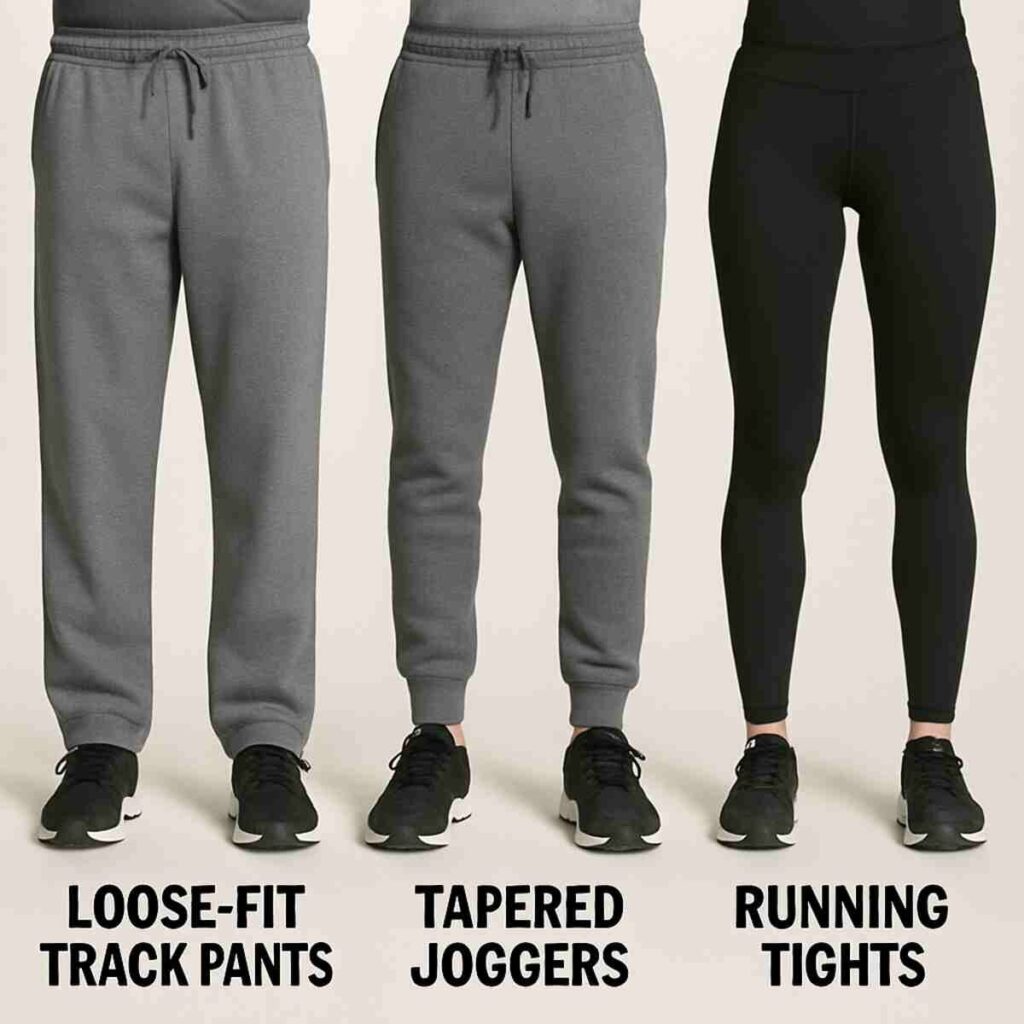
When choosing between loose and tight fit gym pants, use your main activity as your guide. Here’s a quick breakdown of the three main styles:
- Loose Fit: Roomy all the way down. Best for warm-ups, cool-downs, or light activities where you want maximum airflow and comfort.
- Tapered/Athletic Fit: Roomy up top, slimmer below the knee. The all-around winner for running, general gym use, and errands.
- Tight Fit (Tights/Leggings): Skin-tight from waist to ankle. Ideal for serious running, cycling, or lifting where muscle support and zero extra fabric are key.
Now that you know how to match fabric and fit to your needs, let’s clear up some of the confusing names you’ll see on the tags.
Joggers vs. Sweatpants vs. Track Pants: Finally, a Simple Explanation
Walking into a store or browsing online, you’ll see pants labeled “joggers,” “sweatpants,” and “track pants”—and they can look confusingly similar. While brands often use these names interchangeably, there’s a simple way to tell them apart based on what you’ve already learned about material and fit. Getting it right ensures you choose pants that help your workout, not hinder it.
Think of traditional sweatpants as the classic, cozy option. They are almost always made from a thick, heavy cotton or cotton blend. While unmatched for warmth and lounging on the couch, that same cotton becomes heavy and damp with sweat, making them a poor choice for most workouts.
So, what are joggers and track pants? These are the athletic evolution of sweatpants. The key difference is the material. Track pants are defined by their smooth, lightweight synthetic fabric (like polyester or nylon) that manages moisture. The term jogger now mostly refers to the fit—that modern, tapered style that’s looser around the thighs and snug at the ankle.
Ultimately, when considering joggers vs sweatpants for athletic use, the material is what matters most. Today, the best “joggers” are simply a stylish, tapered version of a track pant, combining performance fabric with a functional fit. If your goal is to get active, always opt for the synthetic material of a track pant or performance jogger and save the comfy cotton sweatpants for your well-deserved rest day.
The Small Features That Make a Big Difference: Pockets, Zippers, and Reflectivity
Once you’ve settled on the right material and fit, it’s the small, thoughtful details that elevate a good pair of athletic pants into a great one. These features are all about removing distractions and solving common annoyances, so you can focus on your activity, not your gear. Knowing what to look for helps you choose the right athletic pants for exactly how you plan to use them.
The most useful features are direct solutions to real-world problems. For instance, have you ever cut a run short to go home because your pants were too difficult to pull off over your shoes? There’s a fix for that. Understanding these clever additions makes it easy to find a pair that feels custom-made for your routine.
Here’s a quick guide to what these features solve:
- Problem: Your phone, keys, or card bounce around and feel insecure in a standard pocket.
- Solution: Zippered Pockets. When you see men’s performance joggers with zip pockets, you know they’re built for motion. This feature is crucial for keeping your valuables locked down and secure.
- Problem: You want to easily pull your pants off after a warm-up without removing your shoes.
- Solution: Ankle Zips. Zippers at the ankle are a massive convenience, making these pants one of the best alternatives to running shorts for those who like to layer up for warm-ups and cool-downs.
- Problem: You run or walk in the early morning or evening when it’s dark.
- Solution: Reflective Elements. These small strips or logos are designed to catch and reflect light from headlights, making you much more visible to drivers.
Not every pair of pants needs all these features, but knowing they exist allows you to pick the perfect pair for your specific needs, ensuring your clothes add convenience, not frustration, to your workout.
Running in the Cold: How to Choose Pants That Keep You Warm and Dry
When the temperature drops, running outside presents a unique challenge: how do you stay warm without getting soaked in sweat and then catching a chill? The heavy cotton sweatpants of the past are a poor choice, as they become cold and heavy once damp. Thankfully, modern athletic pants solve this problem by combining insulation with the breathability you already know is important, making them excellent alternatives to running shorts as the seasons change.
The key to staying warm lies in a fabric feature often described as a fleece-lined or brushed interior. If you turn these pants inside out, you’ll see a soft, fuzzy texture. This isn’t just for comfort; that fleecy surface is designed to trap a thin layer of your own body heat against your skin, acting like a personal insulator. Unlike cotton, these materials still wick sweat away, so you get warmth without the wet, clammy feeling. This one feature makes them some of the best joggers for running in cold weather.
For days when it’s not just cold but windy, you’ll need an extra layer of defense. A biting wind can cut right through standard knit fabric and strip away your warmth, no matter how insulated your pants are. This is where wind-resistance comes in. Pants with this feature have a tighter, denser weave on the outside that acts as a shield, blocking the wind from penetrating the fabric. This is a crucial difference when comparing running tights vs track pants for performance on a blustery day, as many winter-specific models include a wind-resistant panel on the front.
So, how do you choose? Think of it in two stages. For a cool, crisp autumn run, a pair of joggers with a brushed interior will likely be all you need to stay comfortable. But for freezing winter days with a biting wind, you’ll want the complete package: a brushed interior for insulation plus a wind-resistant exterior for protection. Of course, these features are designed for the outdoors. If your workout is taking you inside to the gym, a different set of features becomes much more important.
For the Gym and HIIT: Why Stretch and a Tapered Fit Are Non-Negotiable
Once you head indoors for a gym session or high-intensity interval training (HIIT) class, the rules change entirely. The focus shifts away from weather protection and toward maximizing your freedom of movement. Workouts involving squats, lunges, and box jumps demand a pant that can keep up without holding you back. This is where a specific combination of fabric and fit becomes essential, answering the question of are joggers good for working out with a resounding “yes”—if you choose the right kind.
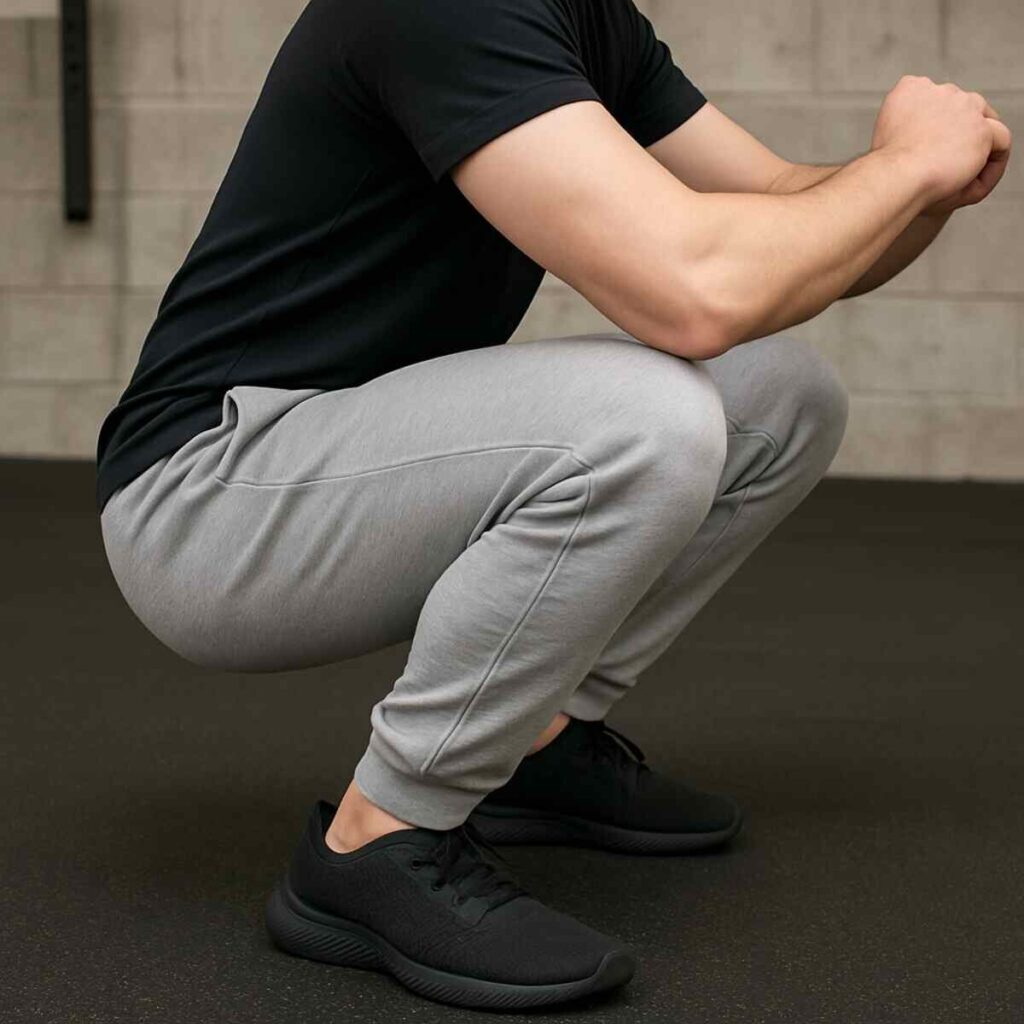
Have you ever felt your pants pull uncomfortably tight across your knees or seat during a deep squat? That’s the feeling of a fabric with limited mobility. To avoid this, look for pants with four-way stretch. Unlike materials that only stretch in one direction, this highly flexible fabric is engineered to stretch both vertically and horizontally. It moves exactly how you do, providing complete freedom so you can focus on your form, not on whether your pants are about to rip.
Beyond pure stretch, the actual shape of your pants is a matter of safety and convenience in a busy gym. Loose, baggy pant legs can easily snag on a weight rack, catch on a dumbbell, or interfere with the pedals of an exercise bike. This is why tapered fit athletic pants for mobility are the superior choice. They offer room and comfort around the hips and thighs but narrow down toward the ankle, keeping the excess fabric securely out of your way and minimizing distractions.
Finally, remember that you’re generating plenty of your own heat indoors. You don’t need the insulation from cold-weather gear; you need breathability. The ideal lightweight sweatpants for gym workouts combine that critical four-way stretch and a safe, tapered fit with a material that lets heat and sweat escape easily. This winning combination ensures you stay cool, comfortable, and unrestricted from your first warm-up set to your final cool-down stretch.

Your Quick-Check Guide: Find the Perfect Athletic Pants in 60 Seconds
All the details about fabric, stretch, and fit can feel like a lot to juggle when you just want a comfortable pair of pants. To cut through the noise, here’s a simple guide on how to choose the right athletic pants. Match your primary activity to the list below to see the exact features that will serve you best, turning a confusing decision into a quick, confident choice.
This simple breakdown clarifies the joggers vs sweatpants for athletic use debate and points you toward the ideal materials.
- If your main activity is Running Outside: Look for a Tapered Fit, Moisture-Wicking Synthetics, Zippered Pockets, and Reflective Details.
- If your main activity is Gym Workouts/Classes: Look for a Tapered or Tight Fit, Four-Way Stretch, and High Breathability.
- If your main activity is General Use & Errands: Look for a comfortable Tapered Fit (Joggers) and a durable Synthetic/Cotton Blend.
- If your main activity is Lounging at Home: Look for a Loose Fit and soft, classic materials like Cotton or Cotton-Blends (Sweatpants).
With this checklist, you can instantly identify what material is best for your workout pants and walk into any store knowing exactly what to look for. It’s not about finding the most expensive pair, but the smartest one for your goals.
Beyond the Hype: Investing in Comfort That Lets You Focus on Your Goals
Where you once saw a confusing wall of options, you can now confidently decode the difference between couch-worthy sweats and high-performance gear. You understand that the secrets to finding the best jogging pants for sports aren’t hidden in brand names, but in the clear language of material, fit, and function that you’re now equipped to read.
This knowledge transforms your shopping from a guessing game into a strategic choice. By prioritizing sweat-wicking fabrics, a fit that moves with you, and features that solve real-world problems, you’re investing in your own comfort and focus. This is how to choose athletic pants that remove distraction, allowing you to get more from every workout.
Ultimately, the most stylish and functional joggers are the ones you forget you’re even wearing. They let you lose yourself in your run, your lift, or your stretch, confident that your gear is supporting you, not holding you back. You now have everything you need to find that perfect, invisible pair.


