


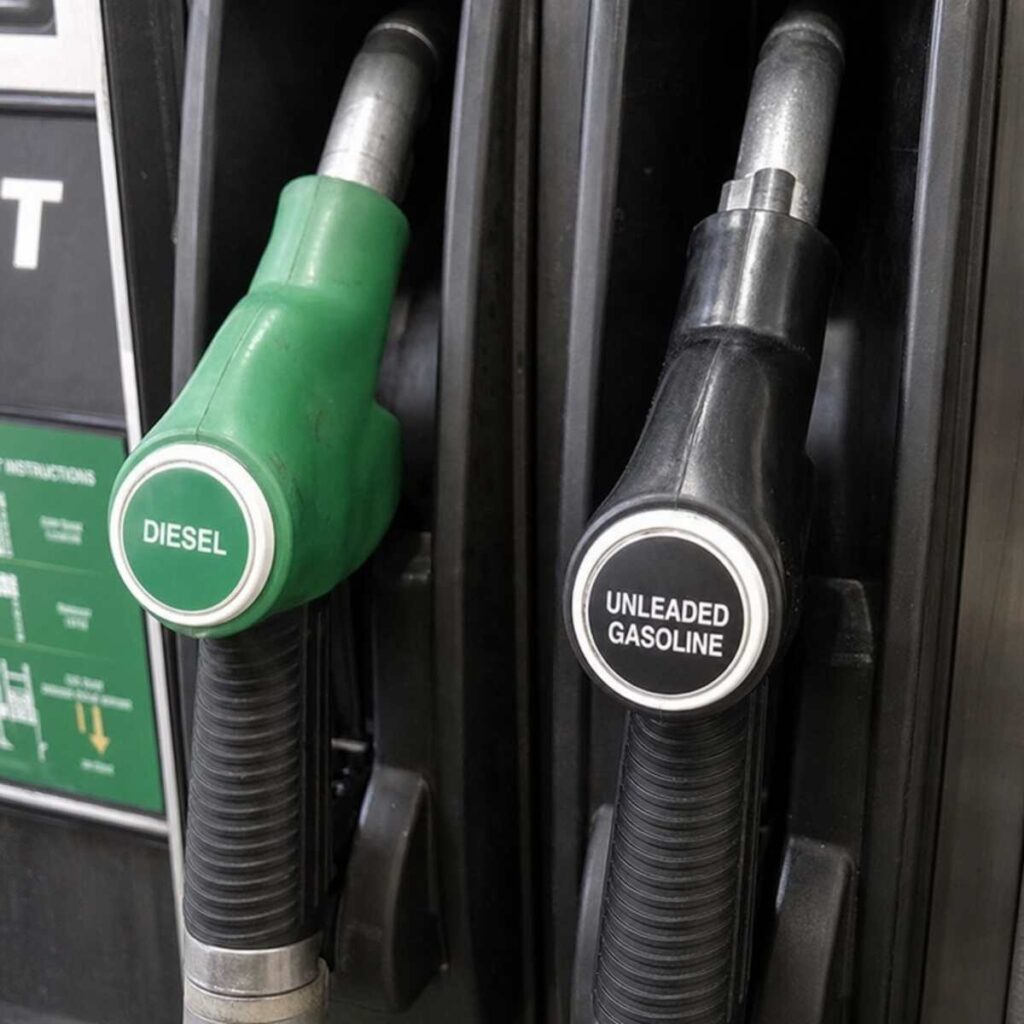
Whether you are preparing a cherished classic car for long-term storage, winterizing your landscaping equipment, or staring in horror at a gas station pump realizing you just put diesel into your unleaded engine, knowing how to drain fuel is an essential skill for any vehicle owner. What do you consider about How to drain fuel.
Fuel systems can seem intimidating, enclosed in steel and plastic, hidden beneath the chassis of our vehicles. However, with the right knowledge, a cautious approach, and the proper tools, removing fuel from a tank is a highly manageable task. This comprehensive guide will walk you through the entire process, covering everything from recognizing when your fuel has gone bad to executing the perfect siphon, all while prioritizing your safety and environmental responsibility.
Why Would You Need to Drain Your Fuel Tank?
Before diving into the mechanical steps, it is important to understand why you might need to empty a tank. Fuel is not meant to sit indefinitely. Depending on the environmental conditions and the type of fuel, it can degrade, become contaminated, or simply be the wrong liquid for your engine.
Recognizing the Symptoms of Bad Fuel in Car
Modern gasoline, particularly ethanol-blended blends, has a relatively short shelf life. Ethanol is hygroscopic, meaning it attracts and absorbs moisture from the air. Over time, this moisture causes phase separation, in which water and ethanol separate from the gasoline and sink to the bottom of the tank.
If you attempt to run an engine on degraded fuel, you will likely notice the symptoms of bad fuel in car almost immediately. These include:
- Hard starting or failure to start: The engine turns over but fails to catch because the fuel lacks sufficient combustibility.
- Rough idling and sputtering: The engine feels jerky or sounds like it is struggling to stay alive at stoplights.
- Engine pinging or knocking: Degraded fuel loses octane, leading to premature detonation in the cylinders.
- Check Engine Light illumination: Oxygen sensors and misfire monitors will quickly detect a flawed combustion process.
- Sudden loss of power: Especially under acceleration, the engine may bog down as the fuel pump sends water-contaminated gas to the injectors.
If you experience these issues after pulling a vehicle out of storage, learning how to drain the fuel tank is your primary step toward restoring engine health.
Recovering a Car After Misfueling
One of the most panic-inducing moments for a driver is realizing they have used the wrong pump. Recovering a car after misfueling requires immediate action. If you put diesel in a gas car, or gas in a diesel truck, do not start the engine. Starting the vehicle pulls the incorrect fuel into the lines, the pump, and the injectors, turning a simple tank drain into a multi-thousand-dollar repair job.
If you are stuck at the pump, removing contaminated diesel from gas tank must be done before the ignition key is even turned to the “accessory” position (which primes the fuel pump). In these scenarios, having a tow truck transport the car to a safe location for a complete fuel drain is the only viable option.

Crucial Safety Precautions Before You Begin
Gasoline and diesel are highly volatile, toxic substances. One small spark or a moment of carelessness can lead to catastrophic consequences. Before you touch a single tool, you must establish a strictly controlled environment.
1. Ventilation and Fire Safety
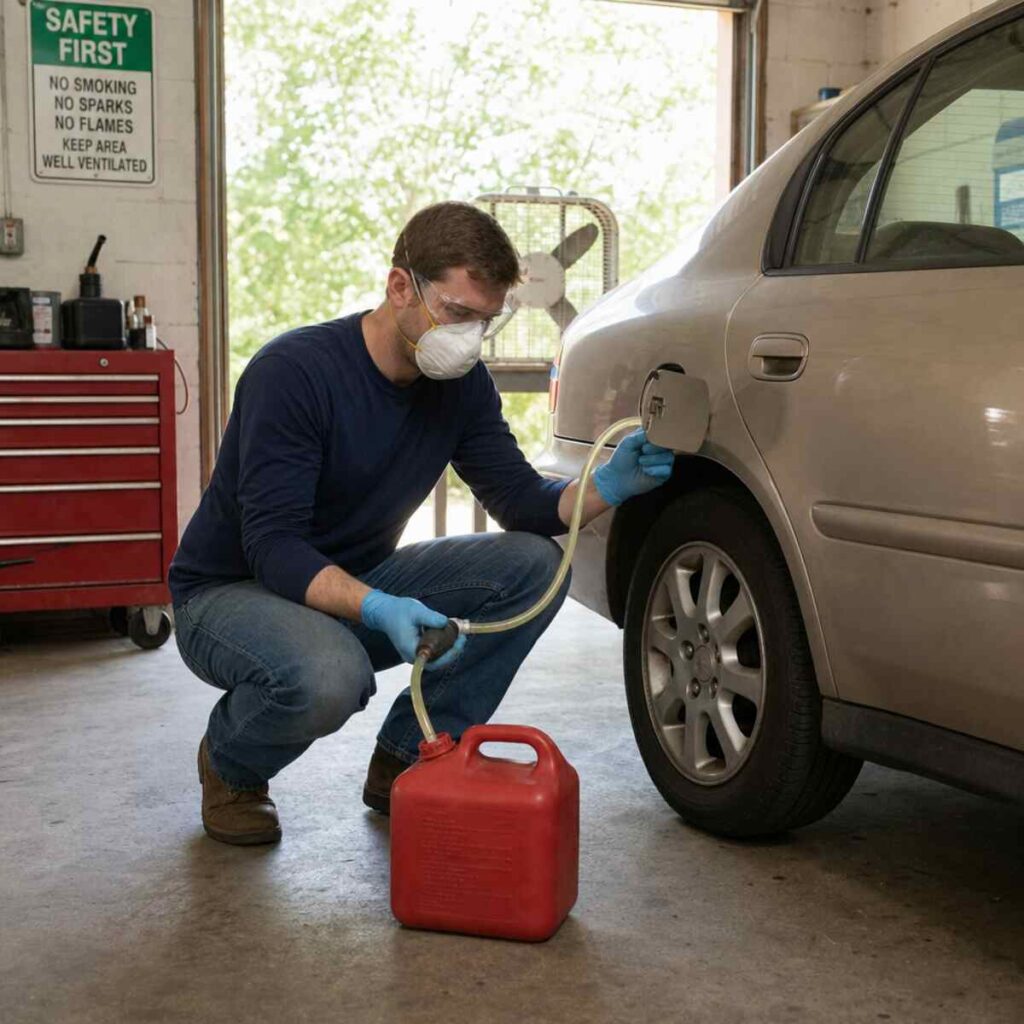
Never drain fuel indoors or in an unventilated garage. Vapors from gasoline are heavier than air; they will sink to the floor and travel, seeking an ignition source like a water heater pilot light or a sparking electrical outlet. Always work outdoors on a flat, level surface. Keep a Class B fire extinguisher (rated for flammable liquids) within arm’s reach.
2. The Hazards of Siphoning Fuel by Mouth
Decades ago, a common movie trope was a character sucking on a rubber hose to start a fuel siphon. Let this be clear: the hazards of siphoning fuel by mouth are severe and potentially fatal. Inhaling gasoline vapors can cause lung damage, chemical pneumonia, and central nervous system depression. Accidentally swallowing even a tiny amount of gasoline can lead to severe internal burns, vomiting, and death. Never use your mouth to start a siphon. Modern tools have made this dangerous practice completely obsolete.
3. Gasoline Storage Containers and Safety Tips
You must have a safe, approved place for the fuel to go once it leaves the tank. Familiarize yourself with gasoline storage containers and safety tips:
- Use only approved containers: Look for red plastic or metal jerry cans that meet EPA, CARB, and OSHA standards. Never use milk jugs, glass jars, or unapproved plastic buckets; gasoline will melt certain plastics and create a massive fire hazard.
- Inspect the seals: Ensure the O-rings and spouts on your storage containers are intact to prevent vapor leaks.
- Fill safely: Place containers on the ground before filling to prevent static electricity buildup. Never fill a container while it is sitting inside a vehicle or the bed of a truck.
- Leave expansion room: Only fill containers to 95% capacity to allow the fuel room to expand as temperatures change.
Choosing the Right Tools for the Job
The method you choose to extract the fuel will dictate your tool list. The most common dilemma for DIYers is choosing between a fuel transfer pump vs manual siphon.
Manual Siphon Pumps
A manual siphon usually consists of a clear, flexible hose with a built-in rubber primer bulb. Squeezing the bulb creates a vacuum that pulls the fluid up the hose and over the apex of the tank, allowing gravity to do the rest of the work.
- Pros: Inexpensive, doesn’t require electricity, highly portable.
- Cons: Slower flow rate, requires the receiving container to be lower than the fuel tank to work via gravity.
Electric Fuel Transfer Pumps
Battery-operated or 12V electric transfer pumps do the heavy lifting for you. You insert the intake hose into the tank and the output hose into your container, switch it on, and watch the fuel flow.
- Pros: Very fast, can pump fuel upward (no gravity required), effortless.
- Cons: More expensive, requires a power source, must ensure the pump is specifically rated for combustible liquids to avoid internal sparking.
If you are looking for the best gas siphon pump for vehicles, look for a high-quality manual jiggler siphon (which uses a brass check valve you shake to start the flow) or a specialized 12V automotive fluid transfer pump. Avoid cheap water pumps, as the rubber seals will degrade rapidly when exposed to gasoline.
You may also need a standard mechanics tool set, safety glasses, nitrile gloves, and a few specialized items like a fuel line disconnect tool, which we will cover in the vehicle-specific guides below.
How to Drain a Fuel Tank: Step-by-Step Methods
There is no single “correct” way to drain fuel, as vehicle designs vary wildly. A method that works flawlessly on a 1995 pickup truck might be completely impossible on a 2022 luxury sedan. Here are the most effective methods, tailored to different vehicle types.
Method 1: Siphoning Gas With a Hose (Through the Filler Neck)
This is the most common approach for older vehicles and the easiest to perform.
- Prepare the vehicle: Park on level ground, turn off the engine, and engage the parking brake. Open the gas cap to relieve any built-up vapor pressure.
- Position your container: Place your approved gasoline storage container on the ground directly below the fuel door. Remember, if you are using a manual siphon, the container must be lower than the fuel tank for gravity to take effect.
- Insert the siphon hose: Feed the intake end down into the filler neck.
- The Anti-Siphon Valve Hurdle: At this stage, many people ask, “Can I pump gas out of my car easily?” If your car was manufactured after the late 1990s, the answer is often no. Modern vehicles feature an anti-siphon valve (a rollover valve) designed to prevent fuel from spilling in an accident—and to deter fuel thieves. If your hose hits a hard metal blockage a few feet down, you have hit this valve. Do not force it. You will damage the valve, triggering a check engine light and requiring an expensive tank drop to repair. If you cannot get past this valve, you must use an alternative method.
- Prime the pump: If you successfully reach the fuel, squeeze the primer bulb on your manual siphon (ensuring the directional arrow on the bulb points toward your storage container) until the fuel crests the highest point of the hose and begins flowing down into your can.
- Monitor the flow: Keep a close eye on your container. When it gets close to full, lift the intake hose out of the fuel inside the tank to break the vacuum and stop the flow.
Method 2: Locating the Fuel Tank Drain Plug (Older Vehicles & Trucks)
Some older cars, agricultural equipment, and many trucks feature a drain plug at the lowest point of the fuel tank, much like an oil pan drain plug. This is by far the easiest way to empty a tank completely.
- Safety Check: Put on safety goggles. You will be directly underneath a stream of fuel.
- Locate the plug: Crawl under the vehicle and inspect the bottom of the fuel tank. Locating the fuel tank drain plug is usually straightforward; it looks like a solitary, large bolt threaded directly into the lowest point of the metal or plastic tank.
- Position the catch pan: Ensure you have a large catch pan or a funnel system that routes directly into approved containers. Fuel will come out incredibly fast.
- Remove the plug: Using a socket wrench, slowly back the plug out. Have your containers ready. Once the plug is removed, allow the tank to drain completely.
- Reinstall: Inspect the O-ring or crush washer on the drain plug. Replace it if it looks worn, then thread the plug back into the tank and tighten it to the manufacturer’s specifications.
Method 3: Using the Vehicle’s Fuel Lines
When an anti-siphon valve blocks the filler neck, and there is no drain plug, you have to get creative. One highly effective method is intercepting the fuel at the fuel rail or fuel filter using the vehicle’s own electric fuel pump.
- Relieve fuel system pressure: Remove the fuel pump fuse, start the engine, and let it stall to relieve the pressure in the lines.
- Disconnect a fuel line: Locate a convenient spot to intercept the fuel—often at the fuel filter under the car, or at the fuel rail under the hood. Using a fuel line disconnect tool is often necessary here. Modern fuel lines use quick-connect fittings that require these inexpensive, color-coded plastic or metal collars to release the internal retention springs safely without damaging the line.
- Attach a drain hose: Once the line is disconnected, slip a length of tight-fitting, fuel-safe rubber hose over the end of the line coming from the tank, and route the other end into your storage container.
- Activate the fuel pump: Reinstall the fuel pump fuse. You can now turn the ignition key to the “ON” (or accessory) position. Do not crank the engine. The vehicle’s computer will prime the fuel pump for about 2-3 seconds, shooting fuel into your container. You will have to turn the key off and on repeatedly to pump the fuel out in bursts. (Note for advanced DIYers: Some choose to remove the fuel pump relay and use a jumper wire across the terminals to make the pump run continuously. If you choose this route, ensure you consult a wiring diagram for your specific vehicle to avoid shorting out the electrical system).
How to Drain Fuel from Small Engines and Motorcycles
The principles of draining fuel remain the same for smaller engines, but the machines’ anatomy requires slightly different techniques.
How to Drain a Motorcycle Fuel Tank
Motorcycles are uniquely susceptible to bad fuel because they are frequently stored for months during the winter. Thankfully, their exposed mechanics make them easy to work on.
- Locate the Petcock: On carbureted motorcycles, look for the fuel valve (petcock) located at the bottom of the tank. Turn it to the “OFF” position.
- Disconnect the fuel line: Remove the rubber hose that runs from the petcock to the carburetor.
- Attach your drain hose: Slip a longer piece of hose onto the petcock nipple and route it into a jerry can.
- Turn to “Reserve” or “Prime”: Turn the petcock to the “RES” (Reserve) position to drain all the fuel, including the bottom-most reserve portion. If your bike has a vacuum-operated petcock (common on late 90s/early 2000s bikes), fuel won’t flow on “ON” or “RES” without the engine running. You must turn the valve to “PRI” (Prime) to bypass the vacuum diaphragm and allow gravity to drain the tank.
- Drain the Carburetors: Do not forget the float bowls! There is usually a small flathead screw at the very bottom of each carburetor bowl. Open this screw to drain the residual fuel from the carbs, preventing the pilot jets from clogging with varnish during storage.
Draining Fuel from Lawn Mower for Winter
Failing to prep landscaping equipment for the off-season is the number one reason small engines refuse to start in the spring. Draining fuel from a lawnmower for winter takes only a few minutes and saves hours of frustration.
- Siphon the tank: Use a small, inexpensive manual turkey-baster-style siphon or a dedicated manual pump to remove the bulk of the fuel from the gas tank into a small container.
- Run it dry: Because small engines hold minuscule amounts of fuel in their lines and carburetors, the best way to ensure they are completely empty is to start the mower. Let it run until it sputters and dies of fuel starvation.
- Attempt a restart: Try pulling the starter cord two or three more times on choke to pull any final fumes or drops of fuel out of the carburetor bowl.
Post-Drain Procedures: Cleaning Up and Storing Safely
Getting the fuel out of the tank is only half the battle. What you do immediately afterward dictates the future health of your vehicle’s engine and your compliance with environmental safety standards.
Clearing Fuel Lines After Draining Tank
If you drained the tank due to severe contamination (such as dirt, rust, or water) or misfueling, simply emptying the tank is not enough. The lines leading to the engine are still filled with the bad fuel.
Clearing fuel lines after draining the tank involves disconnecting the line at the fuel rail (under the hood) and using compressed air—set to a very low PSI (around 10-15 PSI)—to gently blow the residual fuel backwards through the lines and out into your catch container at the back of the vehicle. If you are dealing with a misfueling situation (like diesel in a gas car), many mechanics will also flush the lines with a small amount of clean, correct fuel to ensure all oily diesel residue is purged before reconnecting the system.
Steps to Empty a Fuel Tank Before Storage
If your goal is to park a vehicle for a year or more, metal fuel tanks pose a unique risk: rust. When a metal tank is left empty, the air inside it contains moisture. As temperatures fluctuate, condensation forms on the inside of the bare metal tank walls, leading to severe rust and corrosion.
Therefore, the steps to empty a fuel tank before storage often involve a counterintuitive final step:
- Drain all the old or untreated fuel completely.
- Inspect the tank interior for existing rust or debris with a flashlight (never a lighter!).
- If the tank is plastic, leaving it completely bone-dry is perfectly safe.
- If the tank is metal, the best practice is actually to fill it completely to the brim with ethanol-free gasoline and a high-quality fuel stabilizer. A full tank leaves no room for air, preventing condensation and rust. If you must store a metal tank empty, it is recommended to fog the inside of the tank with a specialized anti-corrosion oil spray.
Environmental Responsibility: How to Dispose of Old Gasoline Safely
Once you have successfully drained the degraded, watery, or contaminated fuel, you are left with hazardous waste. You cannot simply throw it in the trash, pour it down a storm drain, or dump it in the woods. Doing so is highly illegal, causes catastrophic damage to local water tables, and can result in massive fines.
Knowing how to dispose of old gasoline safely is a critical part of vehicle maintenance:
- Contact your local waste management authority: Most counties and municipalities have designated Hazardous Household Waste (HHW) drop-off facilities.
- Check with local auto parts stores or mechanics: Some larger auto parts chains or local mechanics with industrial fluid disposal contracts will accept old gasoline for a small fee or even for free.
- Recondition it (if only slightly old): If the fuel is just a few months old and not contaminated with water or diesel, you can sometimes dilute it. You can mix a small amount of old fuel (e.g., 1 gallon) into a nearly full tank of fresh fuel (e.g., 15 gallons) in a modern car. The computer will easily adjust for the slight dip in octane, allowing you to burn it off safely. Do not do this with water-contaminated fuel or misfueled mixtures.
Final Thoughts
Learning how to drain fuel safely empowers you to take control of your vehicle’s maintenance, winterize your outdoor equipment properly, and save yourself from the disastrous consequences of accidental misfueling at the pump.
Always remember that patience and preparation are your best tools. By respecting the volatile nature of fuel, ensuring proper ventilation, utilizing the correct tools like dedicated transfer pumps or line disconnects, and adhering strictly to environmental disposal guidelines, you can perform this essential automotive task with complete confidence. Stay safe, follow the steps, and keep your engines running on clean, fresh fuel.


