


Choosing a walk-in cooler for your business can feel like a huge, stressful decision. You know you need one, but the technical terms, different brands, and high costs are overwhelming. One wrong choice could mean spending thousands more than necessary or, even worse, buying a system that can’t keep up when your business needs it most. Guide to selecting the Best Walk In Fridge Company.
After all, this isn’t just another appliance; it’s the heart of your operation. Whether you run a restaurant, a flower shop, or a small grocery, that cooler protects your inventory—the very product you sell. In practice, a system failure during a summer heatwave or a busy holiday weekend could mean thousands of dollars in spoiled goods and lost trust from your customers.
Faced with this pressure, many owners believe the first step is searching for the “best walk in fridge company,” but that’s often the wrong question. The name stamped on the door matters far less than the expertise of the team who helps you choose it, installs it correctly, and stands by to fix it. You aren’t just buying a product; you’re finding a long-term partner for a critical business asset.
This guide provides a simple, step-by-step framework for choosing a walk-in cooler supplier you can trust. By the end, you will have the confidence and the right questions to make a smart, safe investment that protects your business for years to come.
Walk-In Cooler vs. Freezer: Which One Does Your Business Actually Need?
When choosing between commercial refrigeration solutions, the first question is simple: do you need to keep things cool or keep them frozen? A walk-in cooler operates like a giant version of your home refrigerator, holding a steady temperature between 35°F and 40°F. It’s the perfect choice for keeping products fresh, from kegs and produce for a restaurant to fresh-cut flowers for a floral shop. A walk-in freezer, on the other hand, is built to maintain a much colder environment, typically around 0°F, to keep products frozen solid for long-term storage.
Making the right choice in the walk-in cooler vs freezer debate comes down to your inventory. If you are running a café that needs to store milk, sandwiches, and fresh juices, a cooler is exactly what you need. But for restaurant refrigeration solutions involving large quantities of meat, pre-made meals, or ice cream, a walk-in freezer is non-negotiable. One keeps your business running day-to-day with fresh stock; the other protects your bulk inventory and long-term assets from spoiling.
This decision also has a significant impact on your budget. Because a freezer must work much harder to maintain its sub-zero temperature, it requires a more powerful cooling system and thicker insulation. Consequently, a walk-in freezer will almost always have a higher upfront purchase price and lead to a bigger monthly electricity bill than a cooler of the same size. Understanding this cost difference is critical, but it’s not the only major financial decision you’ll face.
The #1 Walk-In Cooler Decision Most Business Owners Get Wrong
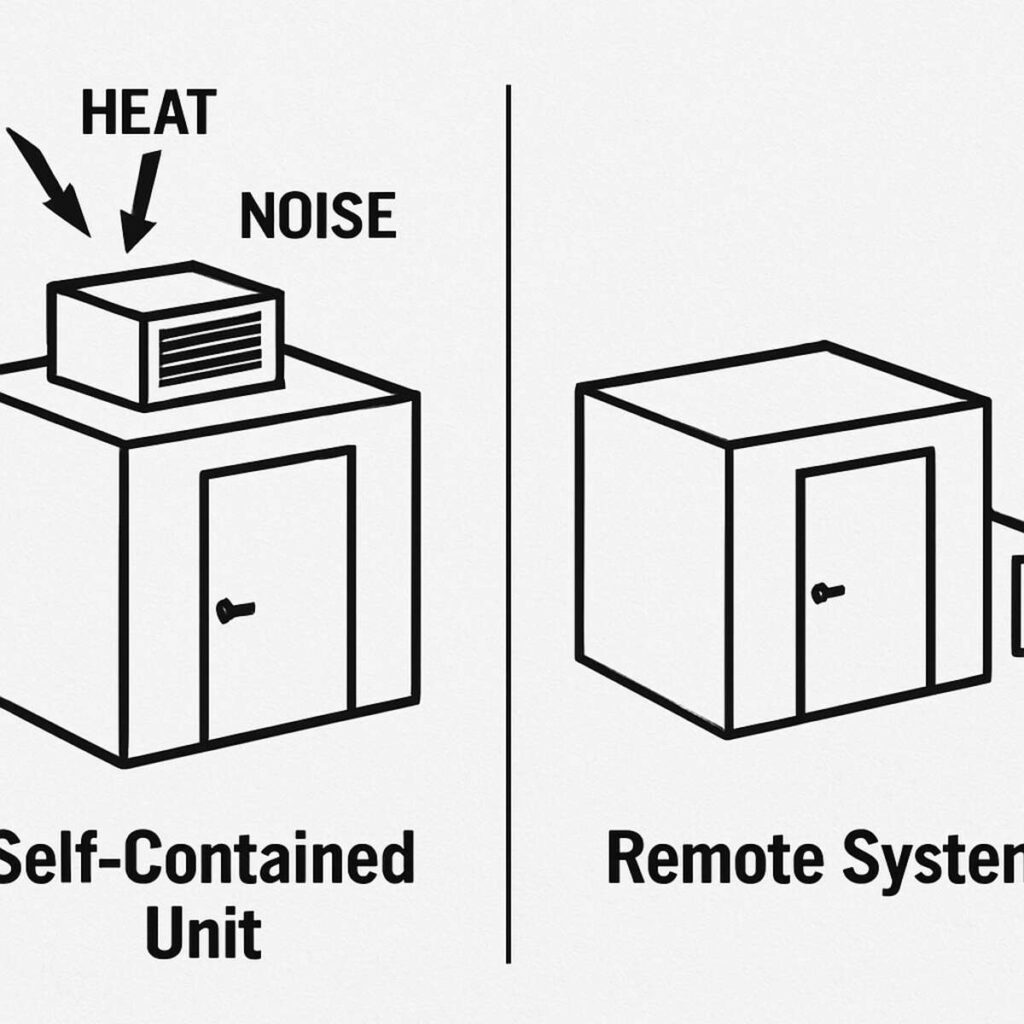
Beyond just choosing a cooler or freezer, the single most important technical choice you’ll make is about the refrigeration system itself. This decision often stumps new buyers, but it’s simple once you understand the core difference. Think of it like choosing air conditioning for your home: you can either get a window AC unit or a central air system. A walk-in cooler offers a similar choice between a self-contained unit and a remote refrigeration system, and picking the right one directly impacts your workspace comfort, budget, and energy bills.
A self-contained unit is the “window AC” option. All the mechanical parts, including the compressor (the engine that creates the cold), are packaged together in a single unit that typically sits right on top of the walk-in box.
- Pros: Lower upfront cost and simpler installation.
- Cons: It vents heat and noise directly into your workspace, making your kitchen hotter and louder. They can also be less energy-efficient.
On the other hand, a walk-in cooler with a remote refrigeration system is like having central air. The noisy, heat-producing compressor is installed separately—outside your building, on the roof, or in a basement—and connected to the cooler with lines.
- Pros: Keeps your indoor workspace quiet and cool. These systems are often more powerful and energy-efficient, especially for larger walk-ins.
- Cons: Higher upfront cost and a more complex installation that requires a certified technician.
The right choice depends on your space and priorities. If you are leasing a small storefront with no way to run lines outside, a self-contained unit might be your only practical option. However, if you own your building or have the ability to install an outdoor unit, a remote system is a superior long-term investment for both employee comfort and lower operating costs. This choice, often overlooked by those just comparing commercial walk-in refrigerator brands, is crucial. But no matter which system you pick, its efficiency is only as good as the box it’s trying to cool.
The Hidden Cost of Cheap Walk-Ins: How Insulation Saves You Money Every Month
A powerful refrigeration system is only half the battle. If your walk-in box can’t hold the cold, you’re just paying to refrigerate your kitchen. The quality of a walk-in’s walls, or panels, is one of the biggest factors in its long-term cost. Think of these panels like a winter coat. A thin jacket won’t stop the cold, forcing your body to work harder to stay warm. Likewise, poorly insulated panels force your refrigeration system to run constantly, driving up your electricity bill. This insulation quality is measured by something called an R-value—a higher number means a better “coat” for your cooler, and more money in your pocket each month.
When comparing options, the thickness of the panels is your best clue to their insulating power. While some budget models use thinner walls, the gold standard for walk-in refrigerator energy efficiency standards is 4-inch-thick panels. Choosing a walk-in with 4-inch panels is a smart investment that pays for itself through lower energy consumption. The upfront savings from a cheaper, thinner-walled unit are often quickly erased by higher monthly operating costs, especially during hot summer months when your system is working its hardest.
Beyond efficiency, there’s a critical standard you can’t ignore: food safety. Always ensure you are buying NSF certified walk-in refrigerator panels. The NSF (National Sanitation Foundation) certification is a seal of approval guaranteeing that the surfaces are smooth, durable, and easy to clean, preventing bacteria growth. A health inspector will look for this certification, and not having it can lead to failed inspections and costly disruptions. This isn’t a feature to compromise on; it’s a requirement for running a professional operation. Knowing these key benchmarks for quality makes it much easier to evaluate what different brands offer.
Norlake vs. Kolpak vs. The Field: How to Compare Top-Rated Walk-In Cooler Manufacturers
When you start researching, you’ll quickly see major names like Norlake and Kolpak. While these are reputable commercial walk-in refrigerator brands, obsessing over the national brand logo is a common mistake. The truth is, the quality of top-tier manufacturers is often very similar. The most important factor in your success is actually the quality of the local dealer who sells, installs, and services the unit. Think of it like buying a car; the best car in the world is a headache if your local dealership provides terrible service.
Your focus should be on finding a company with excellent service area coverage for your specific location. A great walk-in cooler from a national brand is useless if their closest certified technician is three hours away when you have a crisis on a busy Friday night. Before you commit, ask direct questions: “Who will install this unit?” and “If it breaks, how quickly can your team be here?” A strong local or regional company with a dedicated service team is often a much safer bet than a distant national one, even if the brand is less famous.
This local-first approach helps you compare top-rated walk-in cooler manufacturers more effectively. Some brands excel at producing standard-sized, “off-the-shelf” units quickly and affordably. Others specialize in complex, custom-built coolers designed to fit perfectly into awkward spaces. A good local dealer will guide you to the right brand for your specific needs, not just the one they want to sell. Furthermore, they can help you decipher the warranty, explaining the real-world difference between a 10-year “parts only” warranty and a 1-year warranty that includes the expensive expert labor for repairs.
Your goal is to find a reliable partner, not just to buy a box. Instead of starting with a Norlake vs Kolpak walk-in coolers debate, start by evaluating the reputation and responsiveness of the companies that serve your town. A great local team will ensure your walk-in is installed correctly, operates efficiently, and gets fixed fast—protecting your inventory and your peace of mind. Once you have a trusted partner, they can help you determine the exact size and shape you need.
“Will It Fit?” — A Guide to Custom Walk-In Cooler Design Options
When you picture a walk-in, you probably imagine a simple, rectangular box. But for many businesses with unique layouts or challenging floor plans, a standard size just won’t work. The good news is you’re not stuck. A skilled walk-in provider can offer custom walk-in cooler design options that make the most of every square foot. An L-shaped unit, for example, can wrap perfectly around a support column or tuck into an unused corner, turning wasted space into valuable cold storage. This flexibility ensures your investment fits your building, not the other way around.
Beyond just solving a space puzzle, thoughtful design can dramatically improve your daily operations. The right restaurant refrigeration solutions are about more than just temperature; they’re about workflow. Imagine adding glass display doors to a cooler that backs onto your retail floor. Customers can grab their own drinks or flowers, while your staff restocks conveniently from inside the walk-in. Or, you could request a specific type of non-slip flooring for added safety in a fast-paced kitchen. These small customizations streamline tasks, save your team time, and can even enhance the customer experience.
To see what’s possible for your business, start with a tape measure. Before you call a dealer, measure your floor space and, just as importantly, your ceiling height, noting any low-hanging pipes or ducts. Think carefully about where the door will be. Will it swing out into a busy walkway? An expert partner will help you with this assessment, ensuring the design you choose is practical for your team. Getting this plan right from the start is crucial, as it sets the stage for a smooth and successful installation.
The Make-or-Break Service: Evaluating Installation and Maintenance Plans
Even the best-designed walk-in cooler is only as good as its assembly. The difference between a supplier who simply drops boxes at your door and a partner who provides turnkey walk-in freezer installation services can be enormous. A full-service provider handles everything: ensuring the site is prepped, assembling the panels perfectly to prevent energy-leaking gaps, and connecting the refrigeration system correctly. This comprehensive approach means you’re not left scrambling to find a qualified technician, guaranteeing your unit runs efficiently from day one and saving you from costly installation mistakes.
This proactive approach should extend long after the installation is complete. A walk-in cooler is a hard-working machine, and just like a car, it needs regular check-ups to run reliably. This is where commercial refrigeration system maintenance plans become invaluable. The last thing any business owner wants is a catastrophic failure on a busy holiday weekend. A good preventative plan includes regular inspections of door seals, cleaning of coils, and checks on refrigerant levels—small tasks that prevent the small problems that lead to big, expensive emergencies and spoiled inventory.
A good service contract is less of a monthly expense and more of an insurance policy for your business. The cost of one emergency service call, especially after hours, can easily surpass the price of an entire year’s maintenance plan—and that doesn’t even account for the thousands of dollars you could lose in product. Consistent upkeep catches issues early, making the choice of walk-in refrigeration unit repair vs replacement an easier one, as well-maintained components last significantly longer. You’re not just buying a cooler; you’re investing in operational peace of mind.
A company’s belief in its own product and service network is often reflected in its promises. The strength of their installation teams and the availability of their maintenance technicians are key indicators of a trustworthy partner. This commitment is formally captured in the fine print of their product and labor guarantees. It’s crucial to understand exactly what those guarantees cover.
Don’t Get Burned: How to Actually Read a Walk-In Cooler Warranty
After all the talk of service and reliability, the warranty is where a company puts its promises in writing. But not all warranties are created equal, and misunderstanding them can lead to major unexpected costs. The single most important detail is the difference between a “parts” and a “labor” warranty. A parts warranty means if your compressor fails, the company ships you a new one in a box. A labor warranty means they send a qualified technician to your business to perform the commercial refrigeration system repair. One solves your problem; the other just gives you a new one.
A great walk-in cooler warranty isn’t a single guarantee, but a collection of them for different components. You might see a fantastic 10-year warranty on the insulated panels, which rarely fail. However, the real workhorse—the compressor—might only have a one-year warranty for labor. This is a common “gotcha” that is crucial for what to look for in a walk-in freezer company. You must ask specifically about the warranty length for the panels, the compressor, and any other refrigeration parts to see the full picture.
Your most powerful tool is a simple question: “Is labor covered for the entire refrigeration system, and for exactly how long?” A company that stands behind its product will give you a clear, confident answer. A strong warranty that includes labor is your best protection against future headaches and expensive, emergency repair bills. It’s a critical factor that directly impacts the true, long-term price of your walk-in, which goes far beyond the initial sticker price.
How Much Does a Walk-In Cooler Really Cost? A Breakdown of Upfront and Hidden Expenses
So, what’s the bottom line on price? While a standard, small walk-in cooler might start around $5,000, it’s common for the total to climb to $15,000 or more. This big range in how much a commercial walk-in cooler costs comes down to a few key choices. Size is the most obvious factor, and a freezer will always cost more than a cooler of the same size because it needs a more powerful system. The biggest variable, however, is often the refrigeration type; a quiet and efficient remote system will have a higher upfront price than a simpler, self-contained unit.
Crucially, the price on your quote is almost never the final number you’ll write on the check. The most common mistake new buyers make is forgetting to budget for the complete installation process, which often requires hiring other professionals. You must plan for these easily overlooked expenses.
Budget for More Than Just the Box:
- The quoted price for the unit itself
- Freight and delivery charges
- Walk-in cooler installation services
- Electrical work (often needing a new, dedicated circuit)
- Plumbing (if you plan to have a floor drain)
- Site prep (such as leveling an uneven floor)
Thinking about these items helps you shift from the sticker price to the true, total cost of ownership. A “cheaper” unit that needs expensive site prep, has high energy bills, or comes with a weak warranty can quickly become the most expensive option. To get a clear picture of all these expenses and avoid any surprises, your next step is to ask the right questions before you sign anything.
Your Action Plan: 5 Key Questions to Ask Any Walk-In Fridge Company
You now understand the hidden factors—like energy costs, service reliability, and total cost of ownership—that truly define a smart investment. This knowledge empowers you to move beyond the sticker price and ask the right questions. You are an informed business owner ready to identify the best partner for your needs.
To turn that knowledge into action, use this simple playbook during your conversations. These five questions cover what to look for in a walk-in freezer company and will help you compare suppliers on the factors that matter most.
- For my specific building, what are the pros and cons of a self-contained vs. a remote system?
- What is the R-value of your panels and are they NSF certified?
- Who will install my unit and what do your maintenance plans cover?
- Can you explain your warranty for the panels, compressor, parts, and labor separately?
- What other costs, like electrical or site prep, should I budget for beyond this quote?
Armed with these questions, you are in control of the process. This is how to choose a walk-in cooler supplier that becomes a partner, not just a vendor. You have the tools to identify the company that is truly the best fit for your business, your budget, and your peace of mind.


